

Music Festival Brand Activations: The 2027 Planning Guide for Brands
Music festivals have become some of the most competitive environments in experiential marketing.
Brands are no longer simply placing logos beside stages or handing out samples from branded tents. Festival audiences now move between immersive installations, beauty and wellness experiences, customization studios, creator programming, hospitality spaces, interactive technology, product trials, retail moments and full branded environments.
That raises the standard considerably.
A festival attendee may be deciding between seeing an artist, finding food, meeting friends, taking a break, capturing content or visiting another experience at any given moment. A brand activation is competing with all of it.
For brands planning music festival activations in 2027, the question is no longer simply, “Which festival should we sponsor?”
It is: “Why should someone choose to spend part of their festival experience with us?”
That question should shape the festival selection, sponsorship strategy, creative concept, guest journey, footprint, production plan, content strategy and measurement framework.
The business case for live experience remains strong. EventTrack 2026, based on insights from more than 1,000 Fortune 1000 marketers and event attendees, reported that 61% of consumers are more inclined to purchase after an event. Research cited by the U.S. Travel Association found that 95% of in-person attendees trusted brands more after an event. And Eventbrite’s 2026 Social Study found that 79% of 18-to-35-year-olds planned to attend more events, with younger audiences increasingly favoring participation, organic connection and experiences that feel difficult to replicate digitally.
The opportunity is significant. But presence alone is not enough.
A sponsorship can buy access. The activation still has to earn attention.
At Barnastics, we approach festival activations through the intersection of creative strategy, audience experience, production feasibility and measurable engagement. Our creative team brings hands-on experience developing large-scale music and cultural experiences, and the planning principles in this guide are informed by what actually has to work in the field—not just what looks good in a concept deck.
What Is a Music Festival Brand Activation?
A music festival brand activation is an experiential marketing program designed to create direct interaction between a brand and festival attendees.
The activation may be part of an official festival sponsorship, a branded footprint on festival grounds, a nearby pop-up, a creator or VIP experience, a sampling program, a hospitality environment or a larger integrated campaign surrounding the festival weekend.
The strongest activations do more than create visibility. They give attendees a reason to participate.
That might mean solving a real festival problem, offering access to something exclusive, letting people personalize a product, creating a place to recharge, building an entertaining interaction or turning the product itself into part of the festival experience.
This distinction matters. Sponsorship establishes the brand’s rights, access or association with the event. Activation determines what people actually experience once the brand is there.
Presence gets the logo seen. Activation creates behavior and memory.
That behavior might be trying a product, entering an environment, creating content, joining a loyalty program, scanning a QR code, customizing an item, participating in a challenge, learning from a creator or simply spending meaningful time with the brand.
For a broader look at how these programs fit within experiential strategy, see Barnastics’ brand activation services and experiential marketing approach.
Why Festival Marketing Is Different From Ordinary Event Marketing
Music festivals compress an enormous amount of competition into one environment.
There may be tens or hundreds of thousands of consumers in attendance, but those consumers are surrounded by artists, food vendors, merchandise, art installations, sponsors, creators, media, hospitality areas and other brand experiences competing for the same finite amount of attention.
That changes the creative brief.
A festival activation cannot assume that traffic equals engagement. It also cannot assume that a large audience automatically makes the festival the right investment.
The strongest festival marketing strategies operate at the intersection of four things: the brand, the audience, the cultural environment and the experience.
If one of those elements is missing, the activation becomes significantly easier to ignore.
Start With Audience Fit, Not Festival Size
One of the most common mistakes in festival marketing is choosing a property primarily because it is large, recognizable or culturally prestigious.
Reach matters. Relevance matters more.
The U.S. festival landscape includes massive mainstream music festivals, regional properties, genre-specific festivals, food and culture events, creator-led platforms and experiences built around highly specific communities. The audience, context and consumer behavior can vary dramatically from one property to another.
The better question is: Does this festival put the brand in front of the people it actually wants to influence, in an environment where the product or message makes sense?
A skincare brand may have a natural role around SPF, refresh, beauty touch-ups, sweat, travel or self-expression. A wellness brand might build around hydration, recovery, movement, rest or functional product trial. A fashion brand may find relevance through customization, limited-edition merchandise, styling or identity. A technology brand might improve charging, connectivity, content creation, sound or another real behavior already happening onsite.
The festival should create context for the brand, not simply traffic.
That means evaluating audience demographics, geography, music and cultural positioning, consumer interests, creator ecosystems, category saturation, existing sponsors, content potential, onsite restrictions and whether the product has a natural reason to exist there.
Define the Job of the Activation Before Developing the Idea
Brands often begin by discussing what an activation should look like. The better starting point is what it needs to accomplish.
A program built around product trial requires a different guest journey from one built around awareness. A creator campaign needs different infrastructure from a lead-generation experience. A product launch may need education and demonstration. A hospitality program may intentionally prioritize several hundred high-value guests instead of tens of thousands of passersby.
The team should identify a primary business objective and the consumer behavior that would demonstrate success.
If the objective is product trial, how many meaningful trials can realistically happen? If the objective is first-party data, why would a guest willingly provide information? If the objective is content, what will happen inside the experience that people will actually want to photograph or film? If the objective is retail, how does the festival interaction connect to purchase afterward?
Measurement should begin in the brief, not in the recap deck.
Build the Creative Strategy Before the Footprint
This is where many festival activations go backward.
A brand decides it needs a 20-by-20 footprint. Then someone asks what should go inside it.
The footprint should be the result of the idea, not the beginning of it.
Start with the experience. What should people notice from a distance? Why should they approach? How do they understand what is happening? What do they do when they enter? Where does the product become meaningful? What should they feel, learn, receive or remember? What happens when they leave?
Only then should spatial design, scenic production and fabrication begin shaping the physical environment.
At Barnastics, experience architecture looks at the guest journey across attraction, orientation, entry, engagement, education, capture, sharing and exit. Not every activation needs a separate station for each stage. The goal is to make the journey intentional rather than turning the footprint into a collection of disconnected moments.
A customization experience can create dwell time, product interaction, education, content and a personalized takeaway through one activity. A guided tasting can combine trial, conversation, feedback and purchase intent. An immersive installation can create emotional association while leading people toward a measurable digital interaction.
The goal is not necessarily to create the largest structure on the grounds. It is to create one of the experiences people actually choose to enter.
Planning a 2027 festival activation before the concept or footprint is locked? Barnastics can support early creative strategy, experience development and production planning through our immersive experience and festival activation capabilities.
Give Festival Attendees Something Worth Their Time
Festival attendees do not owe brands their attention.
Every interaction has an opportunity cost. Ten minutes spent waiting for an activation may mean ten minutes away from a stage, a friend, food, merchandise or another experience.
That makes the value exchange critical.
The value may be functional: shade, hydration, charging, beauty touch-ups, seating, storage, recovery or a product that solves an immediate need. It may be participatory: customization, games, workshops, challenges, demonstrations, interactive technology or art. It may be emotional: storytelling, community, surprise, nostalgia or artist connection. Or it may provide access through exclusive merchandise, creator interaction, hospitality or a limited experience.
But the strongest value exchange also has a reason to belong specifically to the brand.
A charging station can be useful. If any company could replace the logo without changing the idea, however, the concept probably has not been pushed far enough.
Design for Throughput and Depth
Festival activations create an unusual operational challenge: a lot of people may want to participate at once.
That means the creative team needs to think about two variables simultaneously.
Throughput is how many people can realistically participate. Depth is how meaningful each interaction can become.
A sampling cart may prioritize high throughput. An intimate product consultation may prioritize depth. A festival installation may need both: a fast exterior interaction for a large crowd and a deeper experience for guests willing to enter or continue the journey digitally.
Neither model is inherently better.
The problem comes when the creative idea and operating capacity do not match. If an interaction takes five minutes and only six people can participate at once, a successful activation may accidentally create a line that overwhelms the footprint.
Queue design, staffing, accessibility, station capacity, replenishment, dwell time and guest flow are therefore part of experience design. They are not merely production details.
Festival Experience in Practice: Echoes for ODESZA
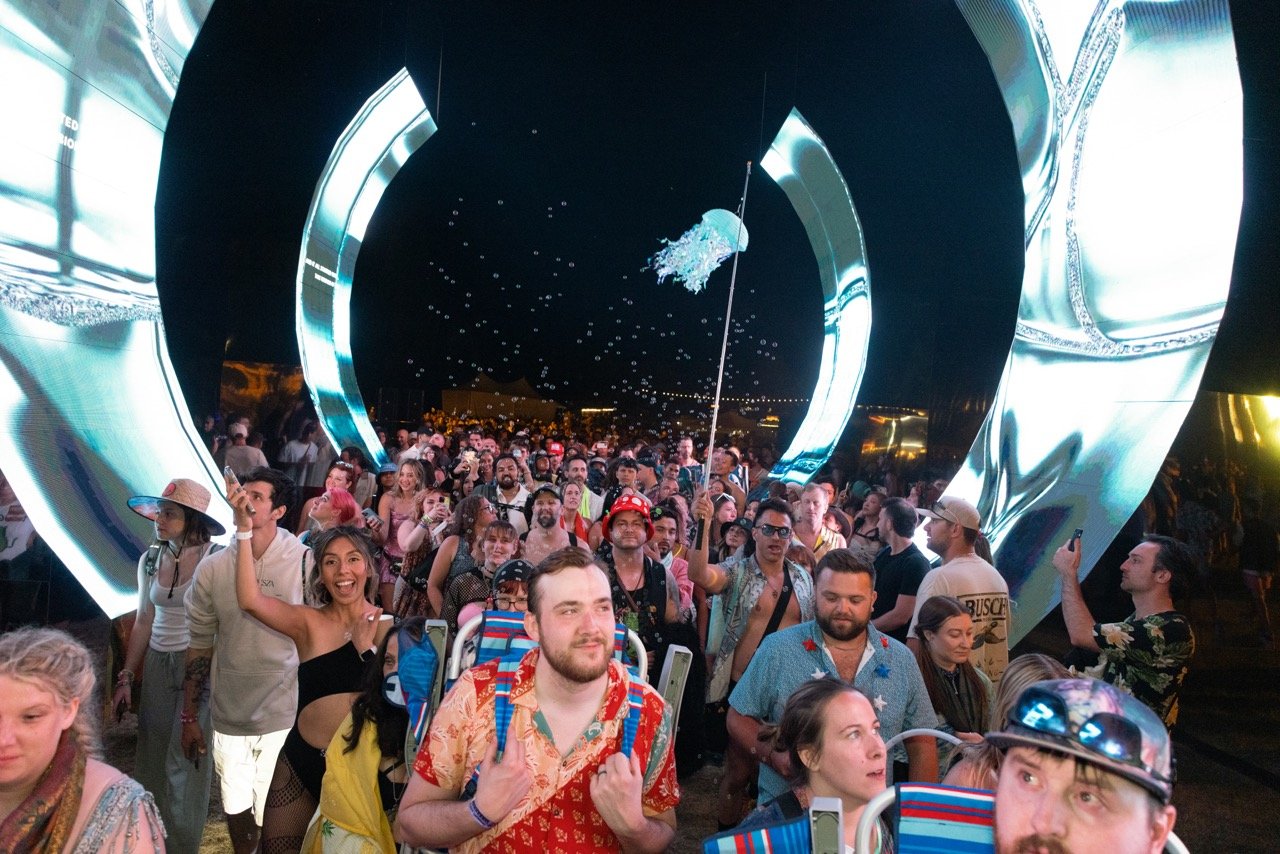
One of the strongest examples within Barnastics’ creative leadership network shows what can happen when a festival experience begins with emotion rather than branding.
Echoes was created for ODESZA’s finale performances at The Gorge. Barnastics Head of Creative Jenny Feterovich served as Creative Director on the project, which combined sculptural architecture, light, reflection, motion-responsive audio and spatial storytelling.
Instead of building the experience around overwhelming corporate signage, the creative approach centered the relationship between ODESZA and its fans. Audience members had been invited to share personal memories connected to the music, and those stories became part of the physical experience through audio and visual storytelling.
Independent coverage of Echoes documented the project’s highly compressed production schedule and Feterovich’s role as Creative Director. The finished experience demonstrated how technology could support a deeply human idea rather than become the idea itself.
The published project welcomed more than 60,000 walk-throughs, while digital coverage extended its reach far beyond the physical audience.
The lesson for brands is not to copy the technology. It is to understand the relationship between audience, culture and brand presence.
Brand integration does not necessarily become stronger by becoming louder.
Sometimes the stronger association comes from allowing the brand to help create something people genuinely value.
Explore the Echoes case study.
The Oracle at ARC Festival Chicago: Connecting Experience to Measurable Action
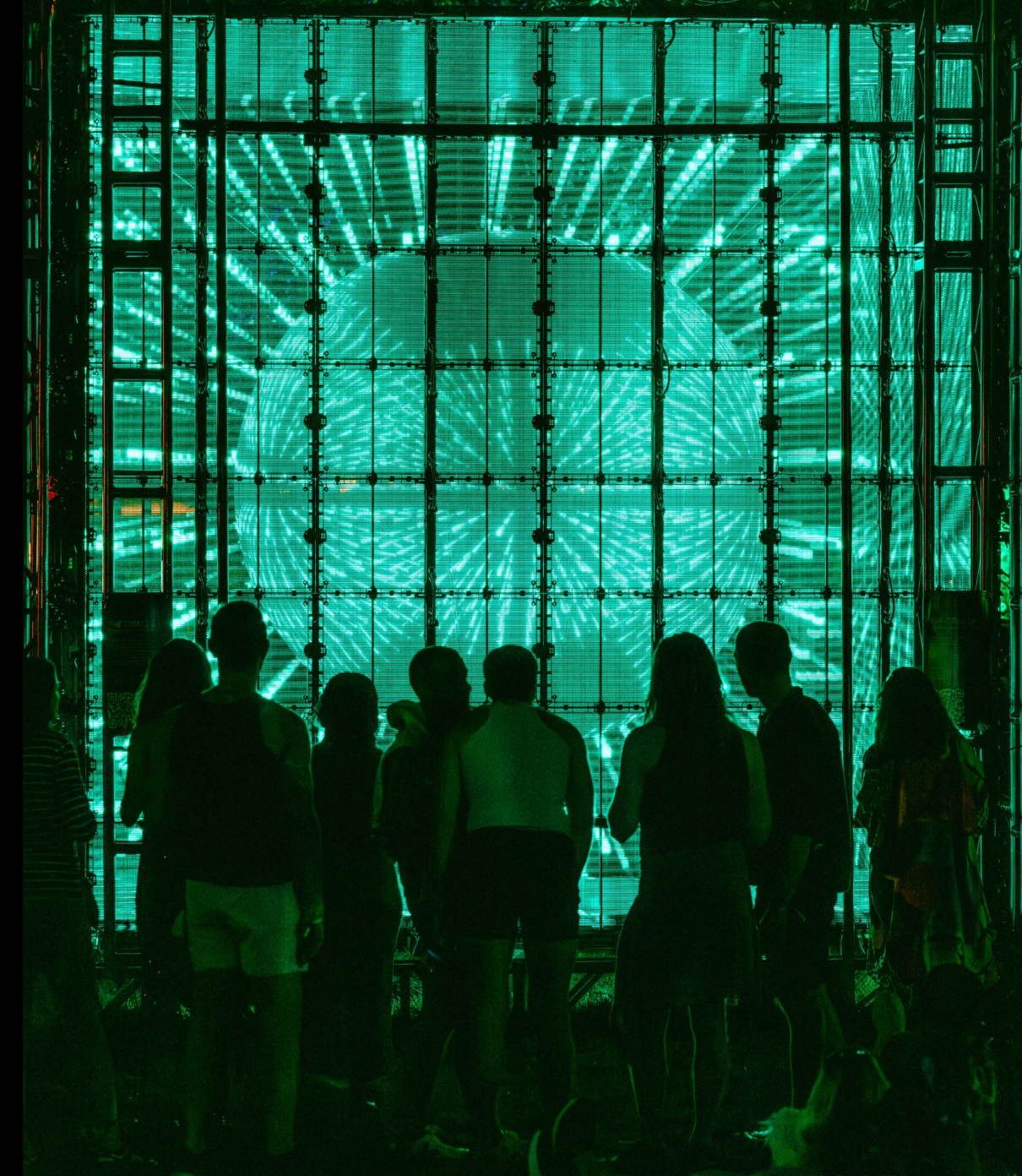
Another festival example featured within Barnastics’ immersive portfolio is The Oracle at ARC Music Festival Chicago.
The installation combined LED mesh, projection-based visuals, audience movement, QR engagement and a custom web experience. The physical environment created attraction. The digital layer gave guests a defined way to continue participating.
The project generated more than 10,000 unique interactions and a reported 15% attendee engagement rate through its integrated QR component.
That distinction matters.
The QR mechanic was not simply placed on signage because someone remembered that the campaign needed measurement. The digital action was part of the experience architecture.
The physical installation created the draw. The mobile layer created another behavior. The environment, technology and measurement system reinforced one another.
For brands planning festival activations in 2027, that is the stronger model: creative, physical production, audience behavior and measurement should be designed together.
Explore The Oracle at ARC Festival Chicago.
Think Beyond the Photo Moment
Content matters, particularly because the reach of a festival program can extend well beyond the people physically onsite.
But a photo opportunity alone is rarely a strategy.
The strongest festival experiences give attendees something to do, not simply something to stand in front of.
A customization process creates a story. A surprising product interaction creates a reaction. An immersive installation creates movement. A creator masterclass creates useful content. A shared challenge creates transformation. A strong physical environment creates visual context.
The photograph becomes documentation of the experience rather than the entire experience.
Instead of asking, “How do we make this Instagrammable?” the better question is: “What will happen here that someone will actually want to document?”
Then design the environment so the brand remains recognizable inside the resulting image or video. Lighting, camera positions, sound, backgrounds, product placement, staff behavior, creator access and crowd management can all influence whether the activation produces useful content.
Content should be designed, not merely documented.
Build Creator Strategy Into the Experience Early
Creator marketing and festival marketing increasingly overlap.
But inviting influencers to an activation is not the same thing as having a creator strategy.
Creators can build anticipation before the festival, host programming, lead tutorials or masterclasses, introduce products, generate editorial content, bring communities together and extend the activation to audiences who never attended physically.
For beauty, fashion, food and wellness brands in particular, creator programming can turn a festival footprint into something much more useful than a passive booth visit.
The creative team should determine early whether creators are functioning as hosts, talent, participants, media, content partners or part of the audience-development strategy.
That decision affects the footprint, schedule, contracts, hospitality, lighting, production, backstage requirements, guest management and content deliverables.
Creator strategy should therefore be developed alongside the experience rather than added after the activation has already been designed.
On-Site and Off-Site Festival Activations Are Different Strategies
A brand does not necessarily need to be inside festival gates to participate in the cultural moment.
An official onsite sponsorship provides direct access to the ticketed audience and association with the festival. It may also involve approved vendors, credentialing, defined footprints, security protocols, operating restrictions, sampling rules, build requirements, power guidelines, installation windows and other property-controlled production processes.
Festival-adjacent activations operate differently.
Hotels, retail stores, restaurants, creator houses, nearby venues, transportation routes and other cultural touchpoints can become part of the strategy. A beauty brand might create a prep experience before the festival. A wellness brand could build a recovery program. A consumer brand may host creators or media in a smaller hospitality environment. A retailer could connect the cultural moment to a local store.
The advantage can be more creative control and deeper engagement. The challenge is that the brand must generate its own traffic rather than relying on the festival audience already being onsite.
If scale and immediate audience access are the priority, an official footprint may make sense. If creators, hospitality, media or deeper consumer interaction matter more, an adjacent experience may provide greater value.
Some campaigns benefit from both.
How Much Does a Music Festival Brand Activation Cost?
There is no universal festival activation budget because a festival activation is not one fixed deliverable.
Costs can vary based on the property, sponsorship structure, footprint, creative concept, fabrication, technology, labor, operating days, staffing, freight, product, creators, hospitality, content and logistics.
As a directional planning benchmark, Barnastics’ current experiential marketing activation cost guide places large-scale mobile tours, festival activations and fully custom experiential campaigns at approximately $250,000 to $1 million+ depending on scope. Some festival programs can be smaller, while major sponsorship rights, custom fabrication, premium hospitality, talent or complex technology can push total investment considerably higher.
The critical budgeting distinction is that the sponsorship or property fee may be separate from the cost of creating the activation itself.
A complete budget may need to account for strategy, creative development, experiential design, fabrication, scenic production, graphics, AV, lighting, power, connectivity, flooring, furniture, shipping, freight, warehousing, installation, dismantle, labor, staffing, product logistics, creator costs, hospitality, photography, video, insurance, security, travel, measurement, agency management and contingency.
One of the most common mistakes is spending heavily for access to the cultural moment and then underfunding the consumer experience.
Sponsorship and activation are connected investments. They are not necessarily the same expense.
When Should Brands Start Planning 2027 Festival Activations?
Earlier than many teams expect.
Major festival programs have several clocks running at once: sponsorship availability, budget approval, creative development, property approvals, fabrication, staffing, creators, credentials, freight, hospitality, product, content and technical production.
A major custom activation may begin nine to twelve months ahead with festival selection, audience analysis, sponsorship conversations and working budget development. Creative strategy and concept development often become more detailed six to nine months before the event. Design development, feasibility, fabrication planning and measurement systems may intensify four to six months out. Build, staffing, logistics, training and content planning accelerate in the final months, followed by final approvals, credentials, freight and onsite planning in the final weeks.
These are planning benchmarks, not universal deadlines. A lightweight program can sometimes move faster. A highly engineered immersive environment may need significantly more time.
There will always be rush activations. But compressed timelines usually mean fewer options, higher costs and more decisions driven by availability rather than strategy.
More lead time protects both the creative idea and the budget.
Production Reality Is Part of Creative Strategy
Festival experiences do not operate inside controlled showrooms.
Weather changes. Cell networks become overloaded. Power matters. Structures may require engineering. Inventory needs protection. A truck may have one approved delivery window. Staff may need credentials before they can enter. Approved-vendor rules can limit sourcing. Accessibility must be considered. Food, beverage, alcohol, beauty or product sampling may introduce additional requirements. Noise can make normal conversation difficult. Heat, dust, rain and wind can change how an environment needs to function.
Months of strategy and creative work can be weakened within minutes by poor line management, missing inventory, unclear staff roles, delayed vendors, technical failure or a guest flow that behaves differently from what was expected.
That is why field operations are part of the experience, not separate from it.
The public only experiences what happens live.
A creative idea is successful only if it survives the environment in which people actually experience it.
Sustainability Should Begin During Design
Sustainability is increasingly part of live-event strategy rather than a line added to the recap. EventTrack 2026 reported that 82% of brands have or are developing sustainability strategies.
For festival programs, those decisions can influence material selection, modular construction, reusable scenic elements, local sourcing, shipping, power, packaging, product logistics, giveaways, waste and what happens to the activation after strike.
The most meaningful sustainability decisions happen during design. By the time a structure is already fabricated, many of the largest environmental decisions have already been made.
For brands considering multiple festivals or markets, modularity can also improve economics. A strong system can retain the recognizable brand experience while adapting footprint, materials, layout, staffing and supporting programming to different locations.
How Should Brands Measure Festival Activation ROI?
There is no universal festival KPI because there is no universal festival objective.
An awareness activation might measure qualified traffic, participation, creator content, earned media, reach and brand lift. A sampling program may focus on product trials, distribution rate, inventory depletion, feedback and subsequent purchase. A data-driven experience may focus on QR activity, loyalty enrollment, qualified opt-ins or post-event engagement. A retail-connected program may measure store traffic, offer redemption or conversion.
The metric should match the reason the activation exists.
And measurement must be operationally possible.
If a brand wants first-party data, there needs to be a reason for a guest to provide it, sufficient connectivity, an appropriate consent flow, staff training and a plan for what happens with the information afterward.
If the goal is content, content capture needs to be designed into the environment. If the goal is dwell time, there needs to be a way to assess it. If the goal is product trial, the interaction and inventory plan must make trial possible at the expected scale.
Measurement is not something placed on top of an activation after it has already been designed. It is part of the production requirement.
What Should Brands Look for in a Festival Activation Agency?
A festival activation agency should be able to do more than design a beautiful environment or manage a vendor list.
The strongest partner should be able to connect the business objective to the audience, translate that strategy into a physical experience, understand how the experience will operate at festival scale and build a production path that protects the creative idea.
That means asking whether the agency can think through audience fit, sponsorship activation, creative concept development, guest journey, throughput, content, measurement, feasibility, fabrication, staffing, logistics and onsite execution as one connected system.
It also means understanding where the agency’s responsibility begins and ends. Some brands already have a sponsorship opportunity and need creative strategy. Others have an approved concept and need production. Some need an agency to help evaluate the right cultural moment before either of those steps begins.
The right partner should be able to identify the actual need rather than forcing every project into the same service model.
Relevant experience matters as well. Festival work carries production realities that do not always appear in traditional pop-ups or corporate events: dense crowds, compressed install windows, credentialing, weather, temporary infrastructure, high-volume guest flow, sponsorship restrictions and cultural sensitivity.
For brands evaluating agencies, the strongest question is not simply, “Have you worked at a festival?” It is: “Can you show how your team has translated strategy into an experience that worked creatively, operationally and measurably in a festival environment?”
Common Music Festival Brand Activation Mistakes
The most expensive festival mistakes often begin before production.
Choosing the largest festival instead of the right audience can create impressive reach with weak relevance. Buying sponsorship before understanding the activation budget can leave too little investment for the experience consumers actually encounter. Designing a structure before developing the strategy can result in expensive branded real estate with no compelling reason to enter.
Brands also underestimate throughput, add measurement too late, treat creator strategy as an afterthought and build photo moments without a complete guest journey.
Over-branding can become a problem too. Festival audiences are culturally aware. An experience can communicate the brand clearly without covering every available surface in logos.
Compressed timelines amplify every one of these issues. Short lead times reduce vendor options, testing time, production leverage and creative flexibility.
The strongest planning process solves these questions before fabrication begins.
A Better 2027 Festival Activation Planning Framework
Before approving a music festival brand activation, the brand and agency should be able to answer a connected series of questions.
Why this festival? Why this audience? Why this brand? Why this experience? What should people do? What should they receive, feel, understand or remember? How many people can realistically participate? How long will the interaction take? What must be produced? What limitations does the environment create? How will creators or content fit into the campaign? What happens after the guest leaves? How will success be measured?
Those answers should connect.
If they do, the creative and production teams have a strong foundation.
If they do not, locking sponsorship, footprint or fabrication too early usually makes the decisions that follow harder and more expensive.
Planning a Music Festival Brand Activation for 2027?
Festival marketing works best when brands stop thinking of sponsorship as media inventory and start thinking of the festival as a living consumer environment.
The property matters. The audience matters. The creative matters. Production matters. Measurement matters.
But the most important question remains simple:
Why does this brand deserve to be part of this particular moment?
When that answer is clear, the activation has somewhere meaningful to begin.
Barnastics develops experiential concepts, festival brand activations and immersive experiences for companies looking to show up meaningfully across music festivals, cultural moments, launches and live environments. Our role can begin with strategy and creative development and extend through feasibility, production planning, vendor coordination and execution depending on the project.
Planning a 2027 festival activation? Start a project with Barnastics.
Frequently Asked Questions About Music Festival Brand Activations
What is a music festival brand activation?
A music festival brand activation is an experiential marketing program that gives festival attendees a direct way to interact with a brand. It may include immersive environments, product sampling, customization, lounges, creator programming, hospitality, technology, product demonstrations, retail or other participatory experiences.
How far in advance should brands plan a festival activation?
Major custom festival programs should generally begin planning several months in advance. Six to twelve months can provide more flexibility for festival selection, sponsorship discussions, creative development, fabrication, creator programming, logistics and approvals, while technically complex experiences may require an even longer runway.
How much does a music festival brand activation cost?
Costs vary significantly depending on the property, sponsorship structure, footprint, creative concept, fabrication, staffing, technology, talent, hospitality and production requirements. Barnastics’ current budgeting guidance places many large-scale festival and fully custom experiential programs in the $250,000 to $1 million+ range, although smaller programs can cost less and major sponsorship-led activations can cost considerably more.
Does a brand need to be an official festival sponsor to activate?
Not always. Brands may participate through official onsite opportunities or create surrounding experiences such as pop-ups, retail activations, creator programs, hospitality experiences and other festival-adjacent programs. Brands should respect applicable event rights, trademarks, property agreements and local regulations.
What makes a good festival activation?
Strong festival activations combine clear audience relevance with a meaningful value exchange. Utility, entertainment, personalization, product discovery, access, community and immersive storytelling can all create value when the idea also makes sense for the brand and can operate realistically within the festival environment.
How are festival activations measured?
Measurement depends on the objective and may include qualified foot traffic, participation, dwell time, samples distributed, product trial, QR engagement, first-party data, creator content, user-generated content, earned media, brand lift, retail traffic, redemptions, conversions or purchases.
Are music festivals effective for beauty and wellness brands?
They can be particularly strong environments for beauty and wellness brands when the product responds naturally to attendee behavior. Skincare, SPF, haircare, fragrance, hydration, recovery, wellness and self-expression can create useful opportunities for trial, education, content and consumer engagement.
What is the difference between festival sponsorship and festival activation?
A sponsorship establishes the commercial relationship, rights, placement or access a brand receives around the event. The activation is the consumer-facing experience created around those rights. Sponsorship creates the opportunity to be present; activation determines what the audience actually experiences.
Can creators and influencers be part of a festival activation?
Yes. Creators may support pre-event awareness, onsite programming, tutorials, product education, styling, content production, VIP programming and social amplification. Creator strategy is most effective when it is incorporated during creative development rather than added at the end.
What does a festival activation agency do?
Depending on the engagement, a festival activation agency may support festival strategy, audience planning, sponsorship activation, creative concept development, experiential design, guest journey development, feasibility, fabrication oversight, staffing, logistics, production management, onsite execution, content planning and measurement.
Final Thought: Do Not Just Show Up. Belong There.
The biggest opportunity in festival marketing is also its biggest challenge.
People already care deeply about where they are.
They came for the artist. The community. The culture. The escape. The memory.
A brand entering that environment should add to it rather than interrupt it.
That means the best music festival brand activations are not necessarily the loudest, largest or most expensive.
They are the experiences where the audience, idea, environment and brand make sense together.
Echoes demonstrated that principle at festival scale: technology supported emotion, audience participation supported storytelling and brand involvement supported the experience without overpowering it. The Oracle demonstrated another side of the same principle: a strong physical environment can create attraction while a thoughtfully integrated digital layer turns attention into measurable participation.
Those are different experiences, but they reinforce the same lesson.
The objective, audience, creative idea, physical environment and desired consumer behavior need to work together.
That is the standard brands should be planning toward in 2027.
Build something people would still choose to experience even if nobody told them it was marketing.