

Pop-Up Retail as Experiential Marketing: How Brands Use Pop-Ups to Build Awareness, Loyalty, and Market Relevance

As a full-service experiential marketing agency executing brand activations, pop-ups, and immersive campaigns across major U.S. markets, we’ve seen firsthand how pop-up retail has evolved. What was once a short-term sales tactic has become a strategic experiential tool—used by brands to enter new markets, test concepts, build emotional connection, and create cultural relevance.
When approached correctly, a pop-up is not just a temporary storefront. It’s a physical expression of brand strategy—designed to spark engagement, generate earned content, and leave a lasting impression well beyond the footprint of the space itself.
This guide breaks down how brands should think about pop-up retail through an experiential lens: aligning pop-ups with brand objectives, selecting locations that support campaign goals, designing meaningful experiences, and measuring success beyond sales alone.
Why Pop-Up Retail Works as Experiential Marketing
Pop-up retail succeeds when it bridges the gap between brand storytelling and real-world interaction. Unlike permanent retail, pop-ups create urgency, exclusivity, and cultural momentum—key drivers of engagement in today’s attention economy.
As an experiential format, pop-ups allow brands to:
Test new markets without long-term commitments
Launch products within a controlled, immersive environment
Create content moments designed for social and press amplification
Build deeper emotional connections through physical experience
When executed as a brand activation—not just a retail play—pop-ups become campaign assets that support broader marketing and PR objectives.
Aligning Pop-Ups With Brand Objectives
The most successful pop-ups start with clarity of intent.
Before selecting a venue or designing a space, brands should define what the pop-up is meant to achieve. Is the goal to build awareness in a new city? Strengthen brand perception? Support a product launch? Gather real-world consumer insight?
Pop-ups designed around clear objectives tend to feel intentional, cohesive, and memorable. Those without defined goals often default to generic retail layouts that fail to move the brand forward in any meaningful way.
Location Strategy: Visibility vs. Relevance
Location selection is not just about foot traffic—it’s about alignment.
High-traffic areas can be valuable, but only if the audience matches the brand’s target demographic and the environment supports the experience being created. In some cases, a slightly lower-traffic neighborhood with cultural relevance can outperform a busier but misaligned location.
Experiential pop-ups prioritize:
Audience fit over raw volume
Cultural context over convenience
Long-term brand association over short-term exposure
The right location should reinforce the brand narrative, not dilute it.
Designing the Experience (Not Just the Space)
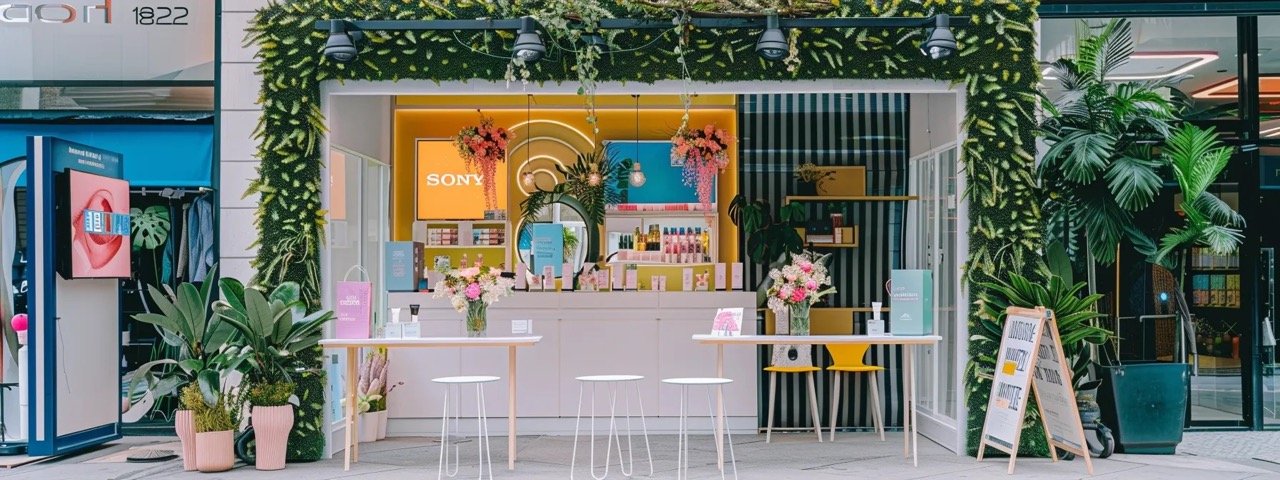
Pop-ups that perform well are designed from the inside out—starting with guest flow, sensory engagement, and storytelling.
This includes:
Clear experiential moments (entry, interaction, takeaway)
Opportunities for hands-on engagement
Thoughtful pacing that encourages exploration rather than quick exits
Visual and tactile elements that feel intentional, not decorative
A pop-up should feel like a moment, not a store. When the experience is compelling, guests naturally stay longer, share more content, and remember the brand well after they leave.
Measuring Success Beyond Sales
Sales matter—but they are not the only indicator of success.
Experiential pop-ups should also be evaluated through:
Engagement quality and dwell time
Content creation and earned media potential
Audience feedback and behavioral insight
Brand lift and post-event sentiment
When pop-ups are treated as part of a broader experiential strategy, their value extends far beyond revenue generated during the run.
How Brands Typically Get Pop-Up Retail Wrong
Despite the popularity of pop-up retail, many brands still approach it with the wrong mindset—and that’s where performance breaks down.
The most common mistake is treating a pop-up as temporary retail instead of a strategic brand activation. Brands often focus too heavily on square footage, product volume, or foot traffic, while overlooking experience design, guest flow, and narrative. The result is a space that looks busy but doesn’t actually move perception, loyalty, or long-term value.
Another frequent issue is late-stage execution. Pop-ups that are rushed—whether due to permitting delays, last-minute venue selection, or vendor lock-ins—tend to compromise on quality. In experiential retail, timing and production discipline are just as important as creative vision.
Finally, brands often measure success incorrectly. A pop-up isn’t only about sales per square foot. The strongest activations evaluate success through a mix of brand lift, earned content, audience engagement, and future market relevance. When pop-ups are approached with a campaign mindset rather than a transactional one, they deliver far more than short-term revenue.
Mini FAQ: Pop-Up Retail Strategy
What is the difference between a pop-up shop and a brand activation?

A pop-up shop is a format—a temporary physical space. A brand activation is a strategy. When pop-ups are designed as brand activations, they focus on experience, storytelling, and emotional connection, not just selling products. The most effective pop-ups operate as experiential campaigns, not short-term retail plays.
How long should a pop-up shop run for maximum impact?
There is no universal timeline, but most high-performing pop-ups run between 3 days and 3 weeks, depending on location, market goals, and production complexity. Shorter timelines create urgency, while longer runs are better suited for market testing or city-specific brand building.
Are pop-up shops still effective for brand awareness?
Yes—when executed strategically. Pop-up shops remain one of the most effective tools for brand awareness when they are designed around experience, content creation, and audience engagement. Pop-ups that prioritize storytelling and shareability consistently outperform those focused only on sales.
Final Thoughts
Pop-up retail is no longer about simply “showing up” in a city. When treated as an experiential marketing tool, pop-ups become powerful drivers of brand relevance, audience connection, and long-term growth.
The brands seeing the strongest results are those that approach pop-ups with intention—aligning strategy, location, experience design, and measurement into a cohesive campaign rather than a temporary storefront.
When done right, a pop-up isn’t fleeting. It becomes a moment people remember—and talk about—long after it’s gone.
Ready to Turn a Pop-Up Into a Brand Moment?
Pop-up retail works best when it’s treated as an experiential campaign—not a temporary store. From concept development to location strategy and full-scale execution, we help brands create pop-ups that drive awareness, engagement, and long-term value.
-Explore our brand activations services
-View experiential campaigns by city
-Start a conversation about your next pop-up